


Turn your selfies into dating profile gold
Our AI photographer transforms your everyday photos into polished, scroll-stopping dating profile shots — in minutes, not days.
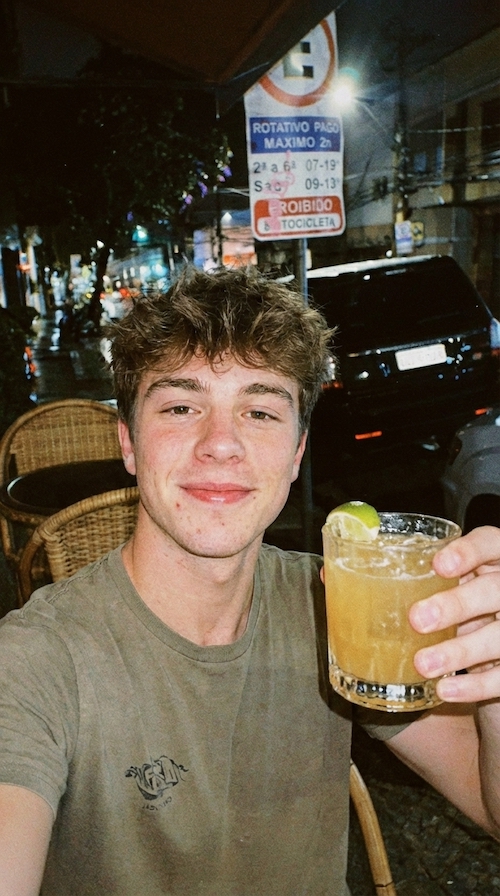
Dating App Photo Examples: See What Works and Why
 Ryan ColeApril 20, 2026
Everyone tells you to "use better dating photos," but almost nobody shows you what that actually looks like. This post is a walk through real photo patterns that work on dating apps, why they work, and the failure modes that show up over and over. No vague advice, no "just be confident." Just the patterns that move match rates.
The data backdrop matters here: analysts who study dating profiles consistently put photos at roughly 70% of what drives initial matching success. Everything else (bio, prompts, clever one-liners) splits the remaining 30%. So if your matches are thin, the highest-leverage fix is almost always the photo lineup, not the words underneath.
Quick stat
~70% of match success comes down to photos
The bio matters. Just not as much as people think. Photos do most of the talking before anyone reads a word.
Example 1: The Lead Photo That Stops the Scroll
The lead photo is the one people see first, in search, in feed previews, in the little thumbnail on the match screen. It has a job to do in about three-quarters of a second: show a clear face, a real expression, and enough context for someone to think "yeah, I'd tap that to see more."
What works, observed across thousands of profile reviews on rating tools like Photofeeler:
Head-and-shoulders framing
Not a full body shot, not a tight selfie. The sweet spot is torso-up with the face taking up roughly a third of the frame.
A real smile, not a mouth-closed pose
Smiles with teeth visible test better than closed-mouth smirks, especially for men, where a smart dating photo strategy for guys makes an outsized difference. Broody stares almost always underperform.
Soft, natural light
Outdoor daylight or light from a window beats every indoor ceiling bulb. Photo reviewers often say 80% of what looks like an "ugly" photo is just bad lighting.
Plain-ish background
Busy backgrounds pull the eye away. A simple wall, a clean street, a park — background should frame you, not compete with you.
Example 2: The "Doing Something" Photo
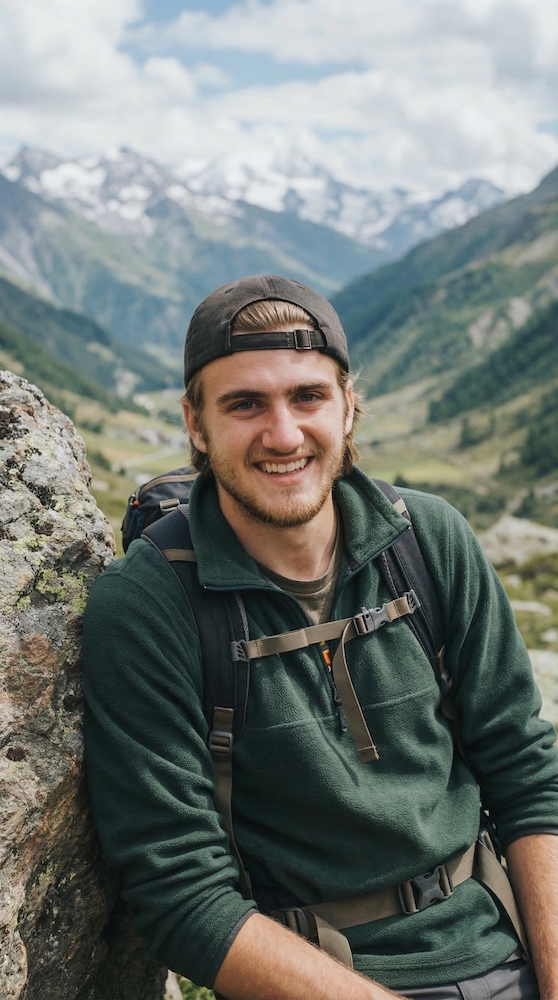
Photo two's job is different: prove you have a life. A clear face photo gets the swipe; a "doing something" photo is what stops the casual yes/no reflex and makes someone actually read the rest. If you're short on inspiration, these creative dating profile picture ideas give you plenty to work with.
Action beats posing, every time
Photos of you actively doing something test higher than static portraits across almost every profile audit.
What "doing something" can look like:
🥾
Mid-hike on a real trail
🎸
Playing an instrument you actually play
🍳
Cooking in your own kitchen
🏂
A sport mid-motion, not a pose
📖
A quieter hobby like reading or painting
🐕
Walking or playing with a pet
Hinge's own profile research has gone a step further and quantified this. Athletic or activity-based photos test measurably higher than static posed shots across their user base. Not because "athletic" is a personality, but because action photos feel real.
Example 3: The Group Shot Done Right
Group photos are one of the most misunderstood slots in a lineup. They absolutely work, but only one, in the right position, with the right composition. It's worth learning when and how to use group shots on a dating profile before you add one.
"One group photo is social proof. Three group photos is a guessing game."
What a strong group photo looks like:
- You're easy to find: centered or front-left, with clear face-to-camera, not hidden in the back row.
- Small group: 3 or 4 people, not a full party. Big group shots make people's eyes give up.
- Candid energy: laughing at something, mid-conversation, walking together. Posed line-ups feel like a wedding party.
- Not photo 1: the lead photo should always be solo. The group photo lives at slot 4 or 5, where it adds texture without confusing anyone.
Example 4: The Full-Body Shot
Every strong profile has one clear full-body photo. This isn't about showing off. It's about not hiding. When every photo is cropped at the chest, people assume the worst and swipe left. A single clean full-body shot closes that loop and builds trust.
Rule of thumb
One full-body photo. Outdoors. Casual clothes. Not a mirror selfie.
A walking photo or a "standing in a scenic spot" shot beats a posed one every time.
Patterns That Quietly Kill Profiles
What not to do
These aren't deal-breakers individually. Stack two or three of them and your lineup bleeds match rate.
- Bathroom mirror selfies: the classic profile flatline. Harsh light, toilet in frame, no one taking the photo. It signals "no life."
- Sunglasses in every photo: one is fine. All of them and people can't read your face.
- Over-filtered or obvious AI edits: people clock unrealistic skin and weird backgrounds instantly, and Pew Research surveys on dating apps consistently show "misrepresentation" is one of the top user frustrations.
- Fish / dead animal photos: unless that's genuinely your thing and you want to filter for someone who shares it, skip.
- Snapchat filters: dog ears and flower crowns still show up and still get swiped left on.
- Five-year-old photos: mismatch between profile and real life ruins first dates.
A Working Photo Lineup, Slot by Slot
Pulling it all together, here's a six-photo lineup that covers the bases without repeating itself:
Slot 1: Lead headshot
Clear face, natural light, real smile. Solo.
Slot 2: Full body
Outdoors, casual, ideally doing something simple (walking).
Slot 3: Hobby / activity
The "doing something" shot. Real, not staged.
Slot 4: Social / group
Small group, you clearly visible, candid energy.
Slot 5: Travel / location
A place that tells a story. Doesn't need to be exotic.
Slot 6: Candid
Laughing, walking, caught mid-moment. Closes warm.
What To Do If Your Photos Are Thin
Most people don't have a six-photo lineup of this quality just sitting in their camera roll. That's fine. The fix is usually a mix of going out and shooting a couple of new ones with your phone, and filling the gap with AI-generated photos that still look like you.
Fotto.ai handles that middle ground: you upload 10–15 selfies, pick the scene types you want (outdoor, travel, lifestyle, hobby), and get back realistic photos in those settings. The useful version isn't "photos that make you look like a different person." It's "photos of you that you could have taken on a normal weekend if someone decent happened to have a camera."
The Takeaway
The photos that work aren't impressive, they're clear. One real headshot, one full body, one hobby shot, one social photo, maybe a travel photo for texture, and a candid to close. No tricks, no gym mirror selfies, no sunglasses-in-every-frame. When you look at a lineup built like that, it feels like a real person having a good week — which is exactly the vibe that gets a right swipe.
Keep Reading
Easily remove unwanted photo backgrounds with Fotto.ai. Enhance product shots, create stunning edits fast, no Photoshop needed.
Use an AI dating photo generator the right way: pick the best selfies, plan a varied lineup, and cull outputs into a profile set that gets swipes.
Dating photo tips for women, from your lead headshot to full-body and lifestyle shots that show your best self without looking staged.
Nine dating profile picture ideas that pop on swipe apps, the composition rules behind them, and a 20-minute plan to shoot them at home.
Your "Hey" gets ignored. Here are 6 Tinder first-message templates keyed to a profile cue, plus the 4 rules that turn a match into a real reply.
Some AI dating photos get spotted instantly, others pass. Here is what gives them away and how to pick ones that hold up on a first date.
A slot-by-slot guide to the Hinge 6-photo carousel: what each slot should do, the best order to run them in, and the mistakes that cost matches.
How much is Match.com, and is it free? What the free plan really does, real monthly costs, whether it is legit and worth it, and how to cancel.