


Turn your selfies into dating profile gold
Our AI photographer transforms your everyday photos into polished, scroll-stopping dating profile shots — in minutes, not days.

How to Get Serious Matches on Tinder (Not Hookups)
 Ryan ColeApril 30, 2026
If your Tinder feed feels like a stream of low-effort, hookup-leaning matches, the platform isn't broken. Your profile is just sending the same fuzzy signal as everyone else's. Quality matches don't come from swiping harder. They come from a profile that quietly screens out the casual crowd and tells the right people you're worth a real conversation.
This post is about the signals (photos, intent fields, lifestyle cues) that filter Tinder's pool toward serious daters. Bio writing and openers are a different lever; we cover those in our companion guide on Tinder bios and openers that attract serious daters.
When Tinder rolled out Relationship Goals, the platform reported that more than half of users opted in to disclose their intent, and "Long-Term Partner" became the most-selected badge. Translation: the people you actually want to match with are signaling clearly. If you're not, you're invisible to them.
Why your Tinder feed feels low-quality
Tinder is the highest-volume dating app in the world, which is both its gift and its curse. Casual and serious users share the same swipe deck. Without explicit signals, the algorithm has no way to sort you into a quality bucket, so it shows you to everyone, and shows everyone to you.
Most users default to a profile that reads as ambiguous: shirtless mirror shot, a club photo, two words in the bio, no relationship goal selected, no intent field filled. That kind of profile is statistically optimized to match with other ambiguous profiles. The fix is the opposite of "be mysterious." It's "be specific, and show you mean it."
The intent fields that do the heaviest filtering
Tinder spent the last few years quietly turning into a structured-data app. The fields below are the cleanest filter you have. Fill them, and you cut casual traffic without writing a single extra word.
Photo cues that quietly attract or repel
Casual-leaning daters and serious-leaning daters consume photos differently. Serious daters slow down on shots that suggest a stable, legible life. Casual daters skim for novelty and body. You want the first kind to stop scrolling.
What signals "serious-ready" in a photo set:
- A clear, well-lit face shot as photo #1: eyes visible, real smile, no sunglasses, no hat. Reporting in The Atlantic on why dating apps make people unhappy notes that ambiguity in profiles is the single biggest source of resentment. Your face is the first place to remove it.
- A full-body shot in a real-life context: a coffee shop, a trail, a market, somewhere a date might actually happen.
- One photo of you genuinely doing something you care about. Cooking, climbing, painting, training a dog. Hobbies are quiet proof of a life outside the app.
- One trusted shot with one or two friends. Never a crowd, never a wedding party, never a bachelorette.
- An optional outdoor or travel shot that reads as "I leave the house," not "look at this trip."
What repels serious matches without you realizing:
- Shirtless gym mirror selfies as photo #1. They read as casual-only, regardless of intent.
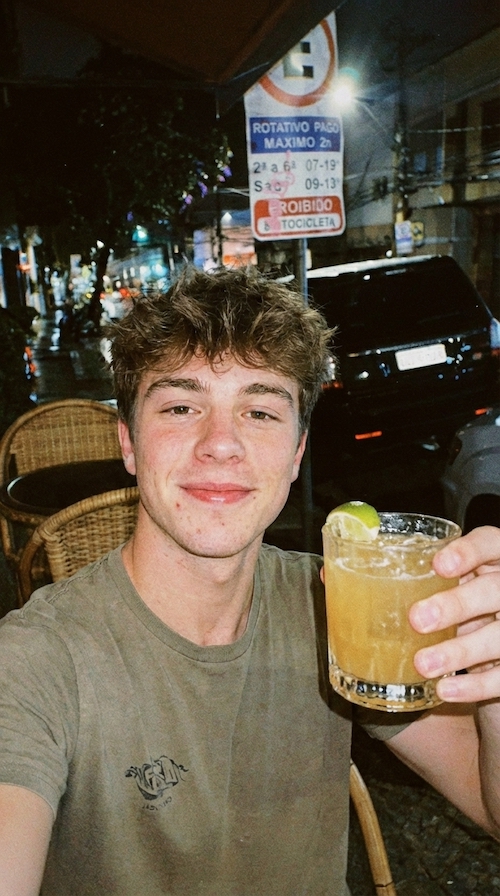
- Club / bar / drink-in-hand photos in three of six slots.
- Heavy filters, beauty-mode skin smoothing, AI-obvious lighting.
- Group photos with five+ people in the first two slots, where your face is unfindable.
- Six photos that are all the same expression and the same crop.
If your photo lineup needs a refresh and you don't have a recent shoot, Fotto.ai can generate clean, natural-light portraits from a few selfies — useful for replacing a weak photo #1 without booking a photographer.
Lifestyle signals that sort you into the "serious" pile
Beyond the structured fields, the thousand quiet details of your photo set tell people what kind of life you live. Psychology Today's relationships index repeatedly emphasizes that long-term compatibility is read from lifestyle alignment far more than from looks alone, and Tinder profiles transmit lifestyle in seconds.
Read your own profile through a stranger's eyes:
- What time of day do most of my photos take place?
- Am I usually inside or outside?
- Am I alone, with a small group, or in a crowd?
- What do my outfits suggest about my weekends?
- Could a stranger guess my job, my city, or one hobby in 6 seconds?
If most of your photos are nighttime, indoors, with a crowd, drink in hand, your profile is sending casual. Not on purpose. Just by default. Replace one or two with daytime, outdoors, calm-context shots and the same face suddenly reads completely differently.
Mistakes that magnetize bad matches
The fastest way to keep matching with people you don't want is to keep doing one of these:
- Leaving Relationship Goals blank. The serious crowd filters by it; you're not in their feed.
- Six photos at the same vibe. Either all party, all mirror selfie, or all suit-and-tie. Variety is what reads as a life.
- Outdated photos. A serious dater will spot a 2018 haircut. Refresh photos at least every 18 months.
- Mirror selfie with the phone covering your face. Disqualifying for anyone screening for ambiguity.
- Using the same hookup-coded photo set you used three years ago and wondering why the matches feel the same. They are the same. Profile equals output.
How long signal changes take to bite
Tinder's matching is a feedback loop. Even after you fix a profile, it takes the system a few days of fresh swipes to reweight who sees you and who you see. Tinder's own write-up on the matching method describes the system as recency-weighted: your last 7 days of behavior is what the algorithm trusts most.
Practical schedule when you change profile signal:
- Days 1–3: mostly old-feed inertia. Don't panic if matches dip.
- Days 4–10: the new signal kicks in. Match composition shifts. Quality should rise even if volume doesn't.
- Day 14 onward: stable read. If quality didn't move, the issue is upstream, usually photo #1 or unfilled intent fields.
For a closer look at how that recency-weighting actually works under the hood, see our breakdown of how the Tinder algorithm actually works. And if you want a deeper photo-only audit, our Tinder profile tips that actually work walks photo selection step by step. For shooting context-rich shots, our guide to casual lifestyle photos that read as approachable covers the small staging choices that read as "real life."
The 10-minute serious-signal audit
Open Tinder, open your profile, and run this list in one sitting:
- Relationship Goals: selected? If not, pick one now.
- Job and school: both filled?
- Lifestyle prompts: at least 4 filled?
- Verification: green checkmark visible?
- Photo #1: face clearly visible, daytime, no shades, no hat?
- Photos #2–#6: at least three different settings, two outdoors, one hobby?
- Any photo more than 18 months old? Replace.
- Bio first line — does it name something specific (a take, a plan, a current obsession)?
Most profiles fail two or three of those. Fixing them is what moves quality, not match volume.
The point
Quality matches on Tinder are a sorting problem, not a volume problem. The platform already has the tools to put you in front of serious daters: Relationship Goals, lifestyle prompts, verification, photo signal. Most people leave half of them blank and then blame the app. Fill the fields, fix photo #1, drop the casual-coded shots, and give it two weeks. The feed you wanted has been on the other side of those changes the whole time.
Keep Reading
Easily remove unwanted photo backgrounds with Fotto.ai. Enhance product shots, create stunning edits fast, no Photoshop needed.
Learn how to increase image size with AI and upscale low-resolution photos without losing quality. Discover fotto.ai’s free online upscaler to enhance your images in seconds.
Four dating app photo examples that consistently outperform, the patterns behind them, and the habits that quietly tank an otherwise good profile.
How does the Tinder algorithm work in 2026? The 3 signals Tinder has confirmed, the 4 myths to drop, and the photo fix that moves your reach.
Stop optimizing for more matches. Write prompts that pull the right ones: the specific-detail rule, examples that work, and the lines to cut.
Matches dropped to zero overnight? The 8 signs of a Tinder shadowban, 4 tests to confirm it, and the reset sequence that actually restores your reach.
We compared 10 AI dating photo generators on price, photos, speed and subscriptions. Real prices, sources linked, and where each one loses.
Bumble matches gone quiet overnight? The 7 signs of a Bumble shadowban, 4 tests to confirm it, and the reset sequence that gets you shown again.