


Turn your selfies into dating profile gold
Our AI photographer transforms your everyday photos into polished, scroll-stopping dating profile shots — in minutes, not days.
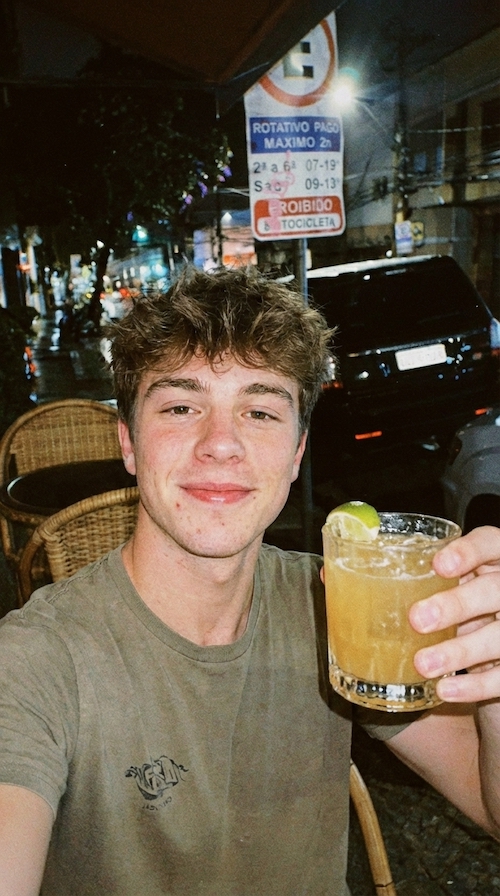

Online Dating Profile Pictures: Your First Impression
 Ryan ColeApril 23, 2026
On a dating app, you do not get a handshake. You do not get a smile across a room, a laugh at a friend's joke, a few seconds of small talk. You get one photo, held in a thumb for maybe half a second, to convince a stranger that you are worth their next swipe. That is your first impression, and it is doing almost all of the work your bio and prompts wish they were doing.
The good news: first impressions on dating apps are not random. They follow surprisingly predictable patterns, and once you understand them, you can stop guessing which photo should lead and start building a profile that earns attention instead of scrolling past it.
The one-second rule
Most swipe decisions happen in under a second, and the lead photo drives almost all of them.
Research on snap judgments shows people form a durable impression of a face in roughly 100 milliseconds. On a dating app, that means your first picture is doing 80–90% of the work before anyone scrolls to photo two.
Why the First Photo Decides Almost Everything
Psychologists have studied how quickly people make judgments about faces, and the numbers are a little humbling: within about a tenth of a second, viewers already form an opinion on traits like trustworthiness, attractiveness, and competence. Extra viewing time makes them more confident. It rarely changes the verdict. The classic primer on this is the psychology of first impressions, and it maps almost perfectly onto how people use dating apps.
On Hinge, Tinder, or Bumble, that snap judgment is amplified. The lead photo fills most of the screen. Viewers are in a fast-scroll mindset. They are pattern-matching for red flags (blurry, awkward, suspicious) and green flags (warm, clear, alive) in a blink. Once the brain tags a photo with a reaction, the halo effect kicks in. Every subsequent photo, your bio, and your prompts all get colored by that first impression.
That is why endlessly rewriting your bio almost never fixes a matchless profile. The bio is downstream of the lead photo. Fix the photo, and the bio suddenly starts doing something.
What People Actually Read in Your Lead Photo
Academic research on dating app impression formation keeps finding the same short list of signals that matter. A widely cited study on multimodal dating profiles showed that while people claim to read the bio, their eyes lock onto the photo first and stay there longest, and the features they extract are simple, fast, and mostly non-verbal. If you want to see that play out on real profiles, these dating-app photo examples break down what works and why.
Your face: clear, close, and alive
A front-facing, half-length shot where your eyes are visible and your expression reads as warm. Tiny phone screens punish poor lighting and distance.
An expression, not a pose
Genuine smiles (the kind that crinkle the eyes) consistently outperform closed-mouth "model" looks. A real laugh beats a staged grin even more.
Context that says "real life"
A café, a park, a sunlit room, anything that suggests a life being lived beats a blank wall or a car selfie.
Image quality
Sharp focus, decent resolution, and natural color. Blurry or heavily compressed shots signal "didn't try," and people pattern-match that to the person.
You, alone, clearly identifiable
Group shots, heavily-filtered selfies, and half-cropped faces all fail the fastest test viewers run: "which one are you?"
The Lead Photo Mistakes Almost Everyone Makes
If you are getting fewer matches than you think you should, the problem is almost never mysterious. It is usually one of a very short, very common list.
Lead-photo red flags
Each one of these quietly cuts your match rate before anyone reads a single word of your bio.
- Sunglasses in the lead shot: eyes are where warmth lives; cover them and your first impression loses most of its signal
- Group photos as photo one: viewers will not play "guess which one" for more than a second
- Full-body long shots: your face is a dot on the screen, your expression unreadable
- Bathroom mirror selfies: the backdrop alone trips a red flag, regardless of how you look
- Heavy filters or smoothing: airbrushed skin reads as "trying too hard" and primes suspicion for the rest of the profile
- Neutral, unsmiling "model" face: you meant mysterious; it reads as unfriendly on a 2-inch screen
- Nightclub or neon lighting: red and pink club light flattens faces and signals "scene," not "I'd like to meet you for coffee"
The Six-Photo Formula That Wins
Apps typically give you six to nine slots. The lead photo gets the match. The rest either earn the message or kill the conversation before it starts. Guys can see this mapped out with specifics in a rundown of the best dating profile photos for men. A reliable structure, in order:
Photo 1
Clear, smiling half-length headshot in natural light: this is your first impression
Photo 2
Casual full-body: walking outdoors, standing somewhere real, decent outfit
Photo 3
An activity shot: cooking, hiking, playing an instrument, something you actually do
Photo 4
A social moment: dinner with friends, a low-key event (you clearly identifiable)
Photo 5
A candid: mid-laugh, caught off-guard, looking away. Signals "real person"
Photo 6
One interesting shot: travel, a hobby, something that invites a first message
Notice the pattern: every slot earns its place. No near-duplicates, no 2019 throwback, no "this is my only good photo" twice. Variety of distance, activity, setting, and outfit is what keeps someone swiping through your whole set instead of bouncing after photo one. If you are stuck on what to put in those slots, this list of dating profile picture ideas that help you stand out is a good place to start.
Lighting, Background, and the Things That Quietly Win
Most "bad" profile photos are not badly composed. They are just badly lit. A mediocre pose in gorgeous golden-hour light outperforms a great pose in harsh overhead fluorescents almost every time. Three cheat codes:
The three lighting rules that fix most profiles
- Natural light, always: late morning, late afternoon, overcast days, or near a big window
- Light on your face, not behind you: back-lit shots turn you into a silhouette
- No phone flash, ever: it flattens skin, kills texture, and signals amateur
Background is just as underrated. A clean, contextual background (a café, a bookshelf, a tree-lined street) does double duty: it keeps attention on your face and tells a tiny story about who you are. A messy bedroom or a cluttered gym mirror does the opposite.
Testing What Actually Works
Most people pick their lead photo on vibes, which is exactly why most people guess wrong. You are the worst judge of your own face. Your friends are the second-worst (too nice, too biased toward how they already see you). The fix is either cold-eyed feedback or real data.
A simple A/B test inside your own profile usually settles it: run one lead photo for two weeks, swap to a different lead for another two weeks with everything else identical, and compare match counts. Crude, but honest. Tools like Photofeeler short-circuit that loop by letting strangers score your photos on traits like "attractive," "trustworthy," and "confident" in a few hours. The scores correlate well with how potential matches react, and it is cheaper and faster than burning two months of swipes to learn the same thing.
The other under-used source: Hinge's own research team publishes periodic findings on what works for their users at Hinge Labs. It is mostly intuitive (smile, be in focus, include variety) but the data backs up what the best-performing profiles already look like.
When You Genuinely Do Not Have Good Photos
Sometimes the camera roll just is not there. Maybe you work remotely, do not travel much, hate being photographed, or have not taken a non-selfie in three years. That is a real problem, and a common one, because good profile pictures are not only about technique. They are about having options. You cannot pick the right lead photo from a set of four similar selfies.
Two realistic paths out:
Hire a friend for a 20-minute walk-and-shoot
Pick a route you like. Wear what you actually wear. Have them shoot in burst mode while you walk, sip coffee, laugh at something dumb. The best shots will be ones you did not know were being taken.
Use AI to generate the set
If real shoots are not happening, Fotto.ai can turn a handful of selfies into a realistic mixed set (a clean headshot, a café moment, an outdoor walking shot) with the lighting and composition dating apps actually reward.
The First-Impression Checklist
Before you save your profile, run your lead photo against this list. If you fail more than one, the lead is probably not pulling its weight:
- Is my face clearly visible, in focus, and taking up a meaningful part of the frame?
- Am I alone, easy to identify, and free of sunglasses/hats covering my eyes?
- Does my expression read as warm, with a genuine smile, a laugh, or soft eye contact?
- Is the lighting flattering (natural, soft, not back-lit or flashed)?
- Does the background feel like a real place, not a bathroom wall or car interior?
- Does the photo look recent, as in "this is what I'd look like at dinner next week"?
- Would a stranger see this and feel like they know one small, true thing about me?
"The goal of the lead photo is not to impress; it's to make a stranger think, for half a second, that they'd want to meet you. Everything else in your profile is downstream of that."
Build a First Impression That Earns the Swipe
Your first impression on a dating app is not something you luck into. It is something you design. Pick a clear, warm, well-lit lead shot. Back it up with variety: a full-body, an activity, a social moment, a candid, a conversation-starter. Cut anything that fails the first-impression checklist. If you want that tuned to putting your best self forward, these dating photo tips for women go deeper. That is the whole game.
If your camera roll is not cooperating, Fotto.ai can generate a realistic, varied profile set from a few selfies, the kind of natural, well-lit photos the apps actually reward, without a photographer or a styled shoot.
Keep Reading
Easily remove unwanted photo backgrounds with Fotto.ai. Enhance product shots, create stunning edits fast, no Photoshop needed.
Use an AI dating photo generator the right way: pick the best selfies, plan a varied lineup, and cull outputs into a profile set that gets swipes.
Dating photo tips for women, from your lead headshot to full-body and lifestyle shots that show your best self without looking staged.
Nine dating profile picture ideas that pop on swipe apps, the composition rules behind them, and a 20-minute plan to shoot them at home.
Your "Hey" gets ignored. Here are 6 Tinder first-message templates keyed to a profile cue, plus the 4 rules that turn a match into a real reply.
Some AI dating photos get spotted instantly, others pass. Here is what gives them away and how to pick ones that hold up on a first date.
A slot-by-slot guide to the Hinge 6-photo carousel: what each slot should do, the best order to run them in, and the mistakes that cost matches.
How much is Match.com, and is it free? What the free plan really does, real monthly costs, whether it is legit and worth it, and how to cancel.