


Turn your selfies into dating profile gold
Our AI photographer transforms your everyday photos into polished, scroll-stopping dating profile shots — in minutes, not days.
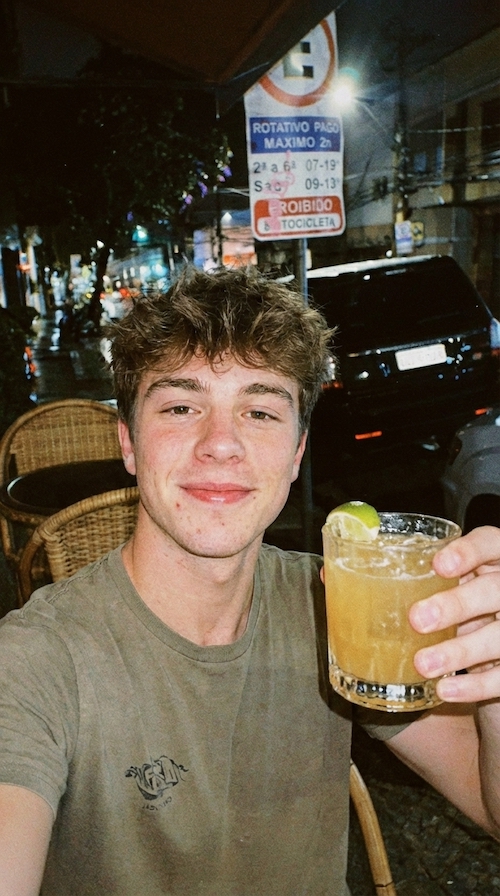
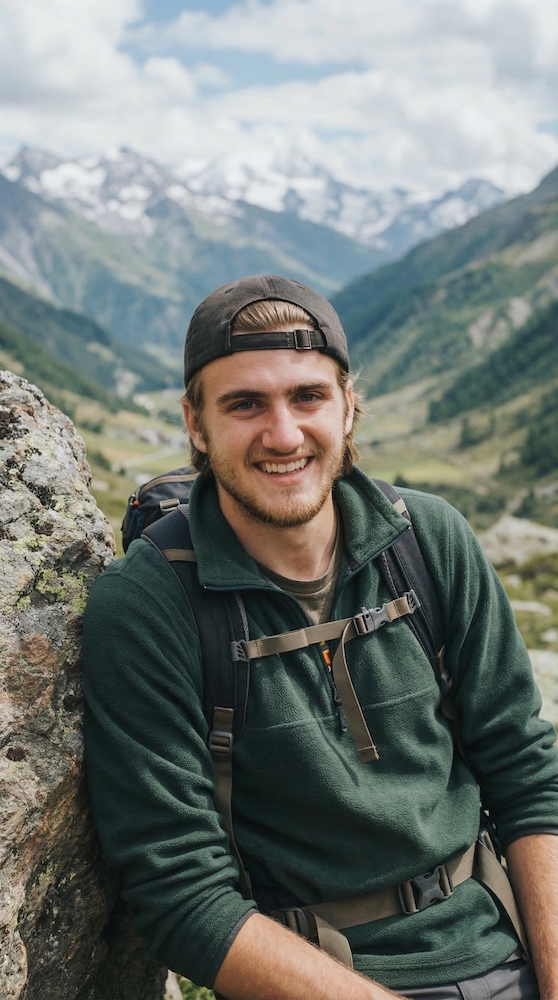
Hinge Photo Ideas for Men Over 30: A Carousel That Reads as Settled, Not Stale
 Ryan ColeMay 11, 2026
Hinge in your 30s is a different game than Hinge at 24. The cohort is more selective, the screening is faster, and the photos that worked for you a decade ago — gym mirror, group bar shot, blurry party candid — now read as someone who hasn't moved on. The good news: the bar isn't "look ten years younger." It's look like a settled, present version of yourself. That's actually easier to shoot than a fake-young thirst trap.
This guide is photo-only and tuned to men 30+. We're not telling you to chase 22-year-olds with a beanie and a backwards cap. We're showing you the carousel that signals stability, lifestyle, and warmth — the three things Hinge users in this age bracket are quietly screening for in the first two seconds.
Across the dating-photo data set — Hinge Labs research and adjacent industry studies — smiling first photos pull roughly 14% more likes, forward-facing headshots get about 102% more likes than turned-away ones, activity photos earn around 45% more likes than static posed shots, and bathroom selfies get roughly 90% fewer likes. None of those numbers move when you cross 30 — but the way you apply them does.
1. Look your age, on purpose
The biggest mistake men over 30 make on Hinge is photographic age denial — soft-focus filters, the same hoodie they wore at 22, a hat pulled low, a "club night out" shot from someone else's bachelor party. Women in your age bracket are not scanning for the youngest face. They're scanning for the most present face. Crow's feet from a real laugh outperform every smoothed-skin filter ever made.
The shift is small but specific:
- Use photos from the last twelve months. Not "the last time I felt good" from 2019.
- Lose the heavy filters. Plastic skin reads as insecure, and the in-person mismatch is brutal.
- Show your real haircut and your real beard. If your hairline has moved, own it — own-it confidence outperforms denial every single time.
- One sharp daylight close-up with eyes visible signals "I have nothing to hide" louder than any caption can.
The tone you're aiming for: a guy who likes how his life looks right now. Not a guy auditioning for a younger version of himself.
2. Stability without bragging — what "established" actually looks like
Women over 30 are screening hard for stability signals. Career, lifestyle, social health, the apartment is clean. But the moment you make any of that the explicit subject of a photo, it backfires — the watch close-up, the keys-to-the-Porsche shot, the suit-and-cigar pose. Those read as compensating, even when they're real. Stability needs to live in the background of a photo, not be the headline.
One published photo analysis of dating-app profiles (Profiling the Self in Mobile Online Dating Apps) found that men in their mid-30s and up start signaling competence and commitment through context cues — pets, hobbies, instruments, kids of friends — rather than direct physical posing. That shift is in your favor: it's easier to shoot, and it ages with you.
3. Neutralize the clichés that read as adolescent at 30+
Some shots that quietly worked at 24 actively cost you matches now. Same outfit, same pose, ten years older — the read changes. Audit your current lineup against this list and delete ruthlessly:
- Gym mirror selfie, shirt up. At 24 it reads as "lifts." At 34 it reads as "still trying to be 24."
- Car selfie. Bored, stationary, often badly lit. The vehicle isn't the flex you think it is.
- Bathroom mirror selfie. Hinge's own dataset puts these at 90% fewer likes. There is no version of this that helps you.
- Nightclub strobe shots. Bottle service, sweat, friends in a haze — reads as someone who is still in the going-out phase. Fine if that's genuinely your life. Risky as your lead photo.
- Bachelor party / Vegas content. Group hat, matching shirts, group of seven. Hard pass as photo #1.
- The Halloween photo. Costume photos confuse the gut read. If you must, slot 5 only.
- Sunglasses in every frame. Eyes carry warmth. Hide them and you're forfeiting your most powerful match-rate lever.
- Photos with kids who aren't yours, uncaptioned. Niece-and-nephew shots without context lead to confusion. Cute, but place them carefully.
If your current Hinge has three of these in six slots, the problem isn't your face. It's the framing. For a deeper dive on what each slot should actually be doing, our Hinge photo vibe playbook walks through the six-slot story in detail.
4. The 30+ man's six-slot carousel
Hinge gives you six photo slots. The version of the carousel that converts in this age bracket looks different from the one a 24-year-old should be running. Here's the lineup:
Sharp daylight close-up. Forward-facing, real smile, eyes visible, head-and-shoulders crop. This is your single most important photo.
Full body in real context. Walking a city street, on a trail, leaving a coffee shop. Confirms scale and that the close-up wasn't a fluke.
Hands on something. Cooking, surfing, repairing, climbing, playing. Activity beats posing — Hinge's own data shows it pulls about 45% more likes.
One social shot. Two friends, you clearly identifiable. Dinner, a porch, a wedding (not your wedding). Skip groups of seven.
One scene shot. A trip, a city you actually go to, a small adventure. Skip generic tourist clichés (no Eiffel Tower forced perspective).
A warm landing photo. Pet, candid laugh, quiet moment. Closes the carousel on humanity.
Notice what's missing from this lineup: the flex. No watch, no car, no bottle, no shirtless mirror. The 30+ carousel converts on the strength of what your life actually looks like, not props. If the photos feel a little quiet to you, you're probably doing it right — Hinge users in this bracket are reading for "could I have a Sunday with this guy," not "could I post him on my story tonight."
5. Fit, grooming, and outfits that age well in photos
You don't need a stylist or a personal trainer. You need three things the camera reads instantly:
One shortcut on lighting: Photofeeler's trustworthiness research consistently shows that soft, natural light + a real smile + visible eyes is what reads as warm and safe to strangers. That stack is age-agnostic. Your job at 30+ is just to actually use it instead of leaning on club lighting and bathroom fluorescents.
6. "Settled but not boring" — the vibe Hinge readers in this bracket want
The screen women over 30 are running, mostly unconsciously: stable enough to not be a project, but interesting enough to not be furniture. That's the line. Lean too hard either way and you fall off it.
Too settled looks like: every photo in the same khakis, lawn-mower energy, no spark, no signs of a life outside work. Too unsettled looks like: every photo a bar, a festival, a different country, no signs of a base. The carousel that converts shows both — a quiet competent home base and a couple of frames where you're clearly enjoying something.
Show this lineup to a friend who's actively dating in your age range and ask one question: "If you swiped past this profile cold, would you read it as a guy who has his stuff together, or a guy still figuring it out?" The answer tells you whether to add a stability shot or an interesting-life shot. You usually need one of the two, not both.
This is also where alignment with prompts matters. Photos that say "settled" need bios that say "interesting" (and vice versa) or the profile reads flat. For the bio side of the equation, our guide on attracting better-quality matches with values-and-lifestyle prompts covers how to land the same vibe in the writing.
7. Don't have great recent photos? Here's the honest path
A common 30+ situation: you haven't been in front of a camera regularly in years, your last good shot is from 2021, and asking a friend for a Sunday photoshoot feels excruciating. Three real options, in order of how well they convert:
- One 30-minute shoot with a friend who has a phone. Outdoors, golden hour, three outfits, burst mode. This produces the best output if you can stomach the awkwardness for half an hour.
- One paid local dating-photo session. An hour with a photographer who shoots dating profiles for a living, often $150–300. Worth it if you're serious about the next 6–12 months.
- AI-generated portraits to fill the gap. Useful specifically for slot 1 and slot 6 if you genuinely don't have anything usable. Quality varies — see our take on whether AI dating photos actually look fake before you pay for any tool. The honest version: a clean AI close-up beats a 4-year-old grainy bathroom selfie. It does not beat a real golden-hour shoot.
If you're spreading your search across Hinge plus Tinder or Bumble — common in your 30s when you want quality but also volume — the same lineup translates, with a small adjustment in shot count per app. We covered the math in how many photos a Tinder profile actually needs, and the principle holds: pick your strongest six for Hinge, your strongest 4–5 for the others.
The one-week audit
You don't need to reshoot everything. Pick the highest-leverage fix and ship it:
If the gap is "I just don't have good close-ups," Fotto.ai can generate clean natural-light portraits from a few selfies — useful specifically for fixing slot 1 and slot 6 while you book a real shoot for the other four.
The point
Hinge in your 30s rewards men who look like the version of themselves they actually are — calm, present, with a life that's clearly in motion. You don't need to look 24, and trying to look 24 is what's killing your match rate. Soft daylight, a real smile, hands on something real, and a carousel that quietly says "this guy's life works." That's the whole formula. The rest is editing.
Keep Reading
Easily remove unwanted photo backgrounds with Fotto.ai. Enhance product shots, create stunning edits fast, no Photoshop needed.
Get more matches by fixing what decides every swipe: your photos. How to shoot, pick, and test AI dating photos that still look like you.
Confidence reads visually. How posture, body angle, hands, eyes and a real smile make your dating photos look like you on a good day.
Nine dating profile picture ideas that pop on swipe apps, the composition rules behind them, and a 20-minute plan to shoot them at home.
A realistic 7-day sprint to lift your match rate without touching your photos. Day-by-day plan: bio audit, rewrite, opener templates, swipe rule, peak-time sessions, conversation pivots, and how to measure and lock in the wins.
Some AI dating photos get spotted instantly, others pass. Here is what gives them away and how to pick ones that hold up on a first date.
A slot-by-slot guide to the Hinge 6-photo carousel: what each slot should do, the best order to run them in, and the mistakes that cost matches.
How much is Match.com, and is it free? What the free plan really does, real monthly costs, whether it is legit and worth it, and how to cancel.