


Turn your selfies into dating profile gold
Our AI photographer transforms your everyday photos into polished, scroll-stopping dating profile shots — in minutes, not days.

Tinder Photo Order: What to Put First, 2nd, and Last
 Ryan ColeJuly 18, 2026
TL;DR
Photo order matters almost as much as the photos, because most people decide on your first one and never swipe past it. Lead with a clear, solo, smiling face shot, put your second-strongest photo in slot 2, and never open with a group shot. The order is a real lever, not a detail.
You can own six good photos and still lose the swipe, because the order is wrong. Someone sees your first card, makes a call in about a second, and most of them never tap through to photo two. So the question "which photo goes first" is not a small one. It decides who ever sees the rest.
This post is about sequence, not selection. It assumes you already have a handful of decent photos. If that is the actual gap, start with our slot-by-slot guide to the best Tinder photos that get matches or, if you are a guy, the six to post and six to delete. This one stays in lane: given the photos you have, what order wins.
The test: does your first photo survive a half-second?
People do not study your lead photo. They glance at it. Research on faces found that a first impression of a stranger forms in about a tenth of a second, and more time barely changes the verdict. So before you argue about slots, find out whether your lead even reads in a blink.
THE HALF-SECOND TEST
Show your first photo to two or three friends for one second, then hide it. Ask two things: could they tell it was you, and did you read as warm and approachable?
If they hesitate on either, your lead is wrong and no reordering saves it. A face they cannot find in a second (group shot, sunglasses, far away) fails the only moment you get. Fix slot 1 first, then worry about the rest.
Why order matters more than you think
Two things stack here. The first is primacy: we lean hardest on what we see first, and the first and last items in a sequence are remembered better than the middle. On a dating app that means slot 1 sets the frame and slot 6 is the last taste, while the middle blurs.
The second is mechanical. Your first photo is the card that shows up in the deck, so it does most of the work whether you like it or not. Tinder knows this so well it built a feature around it: Smart Photos quietly reorders your photos to lead with the one that gets the best response. The company would not have shipped an auto-reorder tool if order were a rounding error.
The order that wins, slot by slot
Here is a sequence that works for most people. It is a starting point, not a law, but the logic behind each slot holds up.
SLOT 1
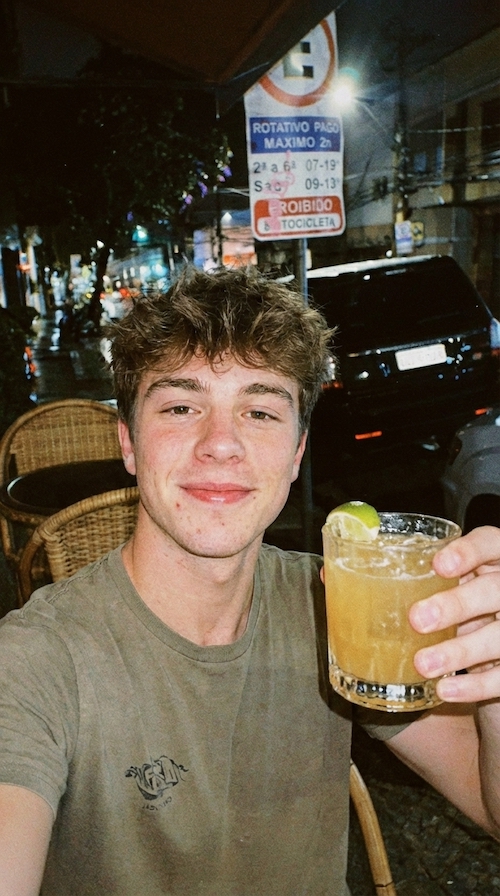
A clear, solo, smiling face shot with eye contact and no sunglasses. This one card carries the whole swipe. Everything else is a bonus nobody reaches if this fails.
SLOT 2
A full-body shot or a strong second angle. It confirms the first photo is honest and answers the question every swiper is quietly asking after slot 1.
SLOT 3
You doing something: a hobby, a trip, a sport. This is where you stop being a face and start being a person with a life worth joining.
SLOT 4
A candid or personality shot, ideally one that makes you laugh. Slot 4 is where a group photo can finally appear, once people already know which one is you.
SLOT 5
One clear interest or passion: the guitar, the mountain, the dog. It gives a match something specific to open with instead of "hey".
SLOT 6
A strong closer, not a leftover. Because of the recency effect, the last photo lingers, so end on something warm rather than whatever you had spare.
The cost of this order is honest: leading with your face means you cannot hide in a crowd or behind shades. That exposure is the point. The profiles that win are the ones that let a stranger see a real person fast, and that is worth more than looking mysterious.
What people get wrong about photo order
These are the beliefs people arrive with, and each one quietly costs them swipes.
"Put your most attractive photo first, whatever it is."
Only if it is a clear solo shot. Your best photo is useless in slot 1 if it is a group shot, a distant one, or you in sunglasses, because nobody can tell which person is you in the half-second they give it.
"Save your best for last to finish strong."
Most people never reach last. A great photo in slot 6 mostly gets seen by people who already liked slots 1 and 2. Front-load your strength, then close well. Do not bury it.
"A group photo first shows I am fun and social."
It shows a crowd. The viewer has to solve a puzzle to find you, and most will not bother. Save the group shot for slot 4, once people know your face.
"Order does not matter, only the photos do."
Same six photos, two orders, very different results. The one leading with a warm solo face beats the one leading with a squinting festival group every time, with identical pictures.
Should you just let Smart Photos decide?
Smart Photos is Tinder testing your photo order for you and leading with whichever gets the best reaction. It is a reasonable safety net, and worth turning on if you genuinely cannot tell whether your best face shot is slot 1 or slot 2.
But name the cost. It needs a fair amount of swipes to learn, so it is slow to help a quiet account. It can also bury a photo you love because it tests cold, and it hands your ordering to a system that only optimizes for the swipe, not for the conversation. The move most people should make: set a strong manual order using the slots above, then switch Smart Photos on only if slot 1 is a real coin-flip. If your matches drop off a cliff, rule out a bigger problem with our guide to how many photos a Tinder profile needs before you keep reshuffling.
When slot 1 is the problem
Every rule here routes back to the same place: a clear, warm, solo face shot in front. If your camera roll does not have one, no order can rescue the profile. That is the single most common gap, and it is fixable.
If a good lead photo is what you are missing, Fotto.ai turns a few ordinary selfies into clean, natural-looking portraits that actually work as a first card, so slot 1 stops being the thing holding you back.
The honest read
Photo order is one of the cheapest fixes on a dating app, because you already own the pictures. Lead with a face a stranger can read in a blink, back it up in slot 2, keep the middle interesting, and close warm. That is most of the game.
Do not overthink slots 3 through 6. The order only truly decides things at the front, where the swipe happens. Get slot 1 and slot 2 right and you have done ninety percent of what ordering can do for you. The rest is just not shooting yourself in the foot.
Frequently asked questions
Does photo order matter on Tinder?
Yes, a lot. Most people decide on your first photo and never swipe past it, so the order at the front does most of the work. Tinder even built Smart Photos to reorder your photos automatically, which tells you order changes results.
Which photo should go first on Tinder?
A clear, solo, smiling face shot with eye contact and no sunglasses. The first card has to let a stranger see who you are in about a second, so anything with a crowd, shades, or distance belongs later, not first.
Should my first Tinder photo be a group photo?
No. A group photo up front forces the viewer to work out which person is you, and most will not bother. Put your best solo shot first and move the group photo to around slot 4, once people know your face.
Is Tinder Smart Photos worth using?
It can be. Smart Photos tests your order and leads with the best performer, which helps if you cannot pick between your top two. The downsides are that it needs volume to learn and can bury a photo you like.
Should you save your best photo for last?
No. Most people never reach your last photo, so a great one in slot 6 is mostly wasted. Lead with your strongest solo shot and simply end on something warm rather than a leftover.
How many photos should a Tinder profile have?
Around four to six is the sweet spot for most profiles. Enough to show range, few enough that every photo is strong. Order those photos well and you get more out of the same set.
Keep Reading
Easily remove unwanted photo backgrounds with Fotto.ai. Enhance product shots, create stunning edits fast, no Photoshop needed.
Use an AI dating photo generator the right way: pick the best selfies, plan a varied lineup, and cull outputs into a profile set that gets swipes.
Dating photo tips for women, from your lead headshot to full-body and lifestyle shots that show your best self without looking staged.
Nine dating profile picture ideas that pop on swipe apps, the composition rules behind them, and a 20-minute plan to shoot them at home.
Your "Hey" gets ignored. Here are 6 Tinder first-message templates keyed to a profile cue, plus the 4 rules that turn a match into a real reply.
Some AI dating photos get spotted instantly, others pass. Here is what gives them away and how to pick ones that hold up on a first date.
A slot-by-slot guide to the Hinge 6-photo carousel: what each slot should do, the best order to run them in, and the mistakes that cost matches.
How much is Match.com, and is it free? What the free plan really does, real monthly costs, whether it is legit and worth it, and how to cancel.