


Turn your selfies into dating profile gold
Our AI photographer transforms your everyday photos into polished, scroll-stopping dating profile shots — in minutes, not days.
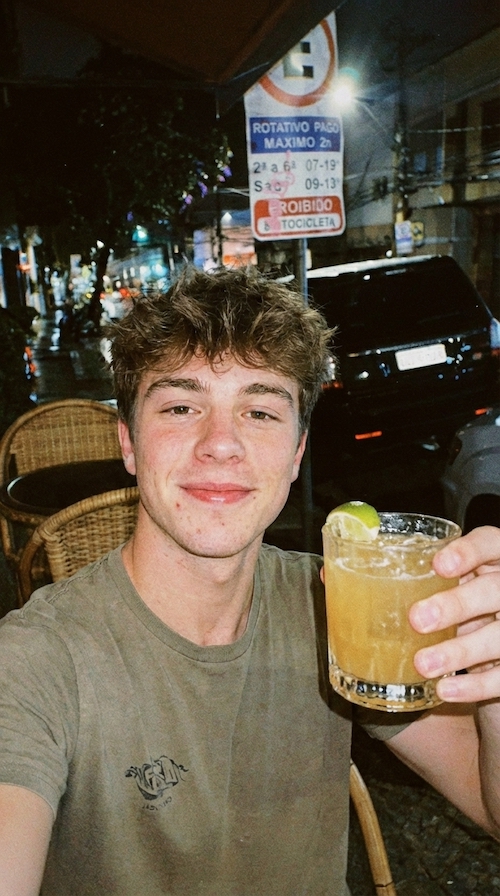
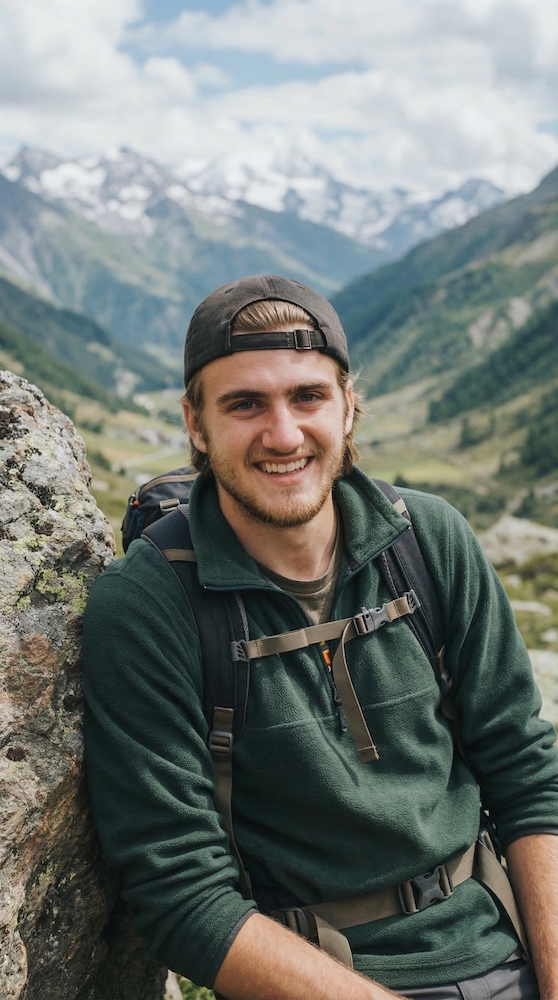
Best AI Dating Photo Generator 2026: 10 Tools Compared
 Ryan ColeJuly 3, 2026
TL;DR
There is no single best AI dating photo generator. This guide compares Fotto.AI against 10 rivals on price, what you get, speed and Trustpilot score, all checked July 2026. Fotto.AI is listed first because it is ours, and at $9.99 it is the cheapest entry and the smallest bundle, 8 images.
Search "best AI dating photo generator" and you'll get a wall of tools all claiming to be the one that finally gets you matches. Almost none of them tell you how to actually judge whether a generator is any good, because judging it honestly would rule most of them out. So instead of ranking apps, this guide hands you the criteria: what separates an AI dating photo that quietly works from one that gets you clocked, ghosted, or side-eyed on the first date.
Read this and you'll be able to evaluate any generator (the one you're looking at now, the one your friend swears by, or one that launches next month) against the only standard that matters: does it produce photos a real stranger would meet in person and not feel misled by. Zero brand loyalty required.
Why this even matters
3 in 10 U.S. adults have used a dating app, and your photos are the first (often only) thing they judge
Roughly three in ten Americans report using online dating, and on a crowded app a swipe decision happens in about a second. That makes your photo lineup the highest-leverage thing you own, and exactly why picking the wrong generator (or trusting one blindly) costs you more than the subscription fee.
1. First, what an AI dating photo actually needs to do
Before you compare tools, get clear on the job. A dating photo isn't there to look impressive in isolation. Its one job is to make a stranger think "I'd want to meet this person" and not be disappointed when they do. Psychologists have shown people form a first impression from a face in a fraction of a second, and that snap read is hard to undo later. So the entire value of an AI generator comes down to one question: does it produce a photo that reads as the real, recognizable you on a good day?
That reframes everything. A generator that makes you look like a glossy magazine version of yourself hasn't helped you. It's set a trap that springs the moment you sit down across the table. The best generators aren't the ones that make you look most attractive. They're the ones that make you look most believably you. If you want the deeper mechanics, our explainer on how AI dating photo generators actually work breaks down the pipeline from selfies to finished shots.
2. The five criteria that separate good generators from bad ones
Every AI photo tool can be scored on the same five axes. Run any generator you're considering through these before you pay for anything.
1. Likeness & realism
The single most important axis. Does the output still look like you (same face shape, same features, same age) or a smoothed, idealized stranger? A tool that drifts your face is worse than useless.
2. Shot variety
A good lineup needs range: a clean close-up, a natural half-body, different settings and outfits. If every shot is the same head-tilt against the same blurred background, it screams "generated."
3. Resolution & detail
Zoom in. Are hands, ears, teeth, jewelry, and hair edges clean, or mushy and "almost right"? Low output resolution hides flaws on a phone but falls apart the second someone looks closely.
4. Authenticity & ethics
Does the tool keep you honest, or push you toward a face you don't have? Look for realistic output and clear data/privacy handling of the selfies you upload. This is a values check, not just a quality one.
5. Ease & price
How many selfies does it need, how long does it take, and what does it cost versus a real photographer? Cheap and fast only wins if the first four axes hold up.
Weight them in order. Likeness and realism outrank everything: a cheap, fast, high-res tool that makes you look like someone else fails the only test that counts.
3. Realism is the whole game: here's how to test it
Most generators can produce a technically clean image. Far fewer can produce one that survives scrutiny. The gap is the uncanny-valley zone: output that's polished enough to look "off" without anyone being able to say why. On a dating app that unease reads as "something's fake," and it kills swipes.
Here's a concrete test you can run on any generator's sample output or your own trial shots:
We go deeper on the specific giveaways in our guide to whether AI dating photos look fake and what tips them off. If a generator can't pass these four tests, no amount of price or convenience makes it the "best" anything.
4. Setting realistic expectations
A good generator can do a lot, and there are hard limits worth knowing before you spend. Being clear-eyed here is what stops you from either dismissing the tech or over-trusting it.
What AI does well
- Clean, well-lit portraits when you don't have good photos of yourself
- Consistent quality without hiring anyone
- Variety of backgrounds and outfits from a handful of selfies
- A fast, cheap way to fill gaps in an otherwise real lineup
What AI can't fake
- Genuine candid moments with real friends or in real places
- Proof you actually do the hobby in your "hobby" shot
- The exact you someone meets on date one, if you let it drift
- Personality that only comes through in real, spontaneous photos
The honest framing: AI photos are a supplement, not a full replacement for having any real photos at all. Whether the trade is right for you is exactly the question we work through in our breakdown of whether AI dating photos are worth it.
5. When AI photos help, and when a real shoot wins
The best answer to "which generator" is sometimes "none, take real photos." Knowing which situation you're in saves money and heartbreak.
AI helps when…
You have almost no decent photos of yourself, you're camera-shy, you need a clean indoor portrait you can't easily shoot, or you want to fill one or two gaps in a lineup that's otherwise real and current.
A real shoot wins when…
You already have (or can easily get) a friend with a phone and an afternoon. Real candids in real places (with genuine expressions, real friends, and the actual settings you spend time in) still outperform anything generated, because they carry proof and personality AI can only imitate.
For a full side-by-side of the trade-offs, see our comparison of AI dating photos versus real photos. The pragmatic move for most people is a mix: mostly real, a couple of AI shots to cover gaps.
6. The authenticity and rules question you can't skip
Even a flawless, high-res, on-likeness AI photo runs into one more filter: the apps' own rules. Dating platforms don't ban AI outright. What they ban is misrepresentation. Tinder's community guidelines require your profile to reflect who you actually are, and Hinge and Bumble run on the same principle. A clean AI photo that genuinely looks like you is fine; a heavily edited one that changes your face is the actual violation, even if it started as a real photo.
Two practical angles worth reading before you commit: what the platforms formally allow, covered in whether AI dating photos are allowed on Tinder, and the detection question: whether Tinder can actually detect AI photos. The short version: a good generator plus verification and honest representation keeps you well inside the lines; a generator that idealizes you is the risk, not the technology itself.
The one rule that ties all six sections together: the best AI dating photo generator is the one whose output a stranger could meet next week and recognize instantly. Everything else (price, speed, resolution, variety) only matters after that test is passed.
7. The ten tools, side by side
Every price below is the vendor's own published entry tier, checked in July 2026, and each one links to the page it came from. Trustpilot scores link to the profile. Check them yourself. Prices move constantly in this category, and several of these tools run a permanent "limited time" discount.
Fotto.AI is listed first because this is our site, and we would rather say that than pretend an algorithm put us there. Everything below it is ranked by how much of its claim we could actually verify: a public Trustpilot profile, a real pricing page, an identifiable company behind the product. Tools built for dating rank above general headshot tools when the evidence is comparable, because a corporate headshot on a dating app is the wrong product doing the wrong job.
That is why the bottom of this table looks the way it does. MatchPhotos and RadiantSnaps both have competitive prices and neither has a Trustpilot profile or a dedicated pricing page. PhotoAI has a profile and it reads 2.2. Cheap is not the same as trustworthy, and the ranking says so.
| Rank | Tool | Entry price | What you get | Payment | Delivery | Built for dating? | Trustpilot |
|---|---|---|---|---|---|---|---|
| 1 | Fotto.AI | $9.99 (was $12.99) | 8 images (4 gens × 2 shots) | One-time · never expires | 2-3 min | Yes | 4.1 |
| 2 | ROAST | $39/month | 40 photos | Subscription | 30 min | Yes | 4.1 |
| 3 | TruShot | $29 (promo, from $38) | Up to 30 photos | One-time | 1 min | Yes | 4.2 |
| 4 | DatePhotos.ai | $29 | 80 photos | One-time | 20-30 min | Yes | 3.5 |
| 5 | InstaHeadshots | $59 | 50 headshots | One-time | 15 min | No · headshots | 5.0 |
| 6 | Aragon AI | $35 (promo, from $44) | 40 headshots | One-time pack | 45 min | No · headshots | 4.9 |
| 7 | HeadshotPro | $29 | 30 headshots | One-time | 2 hrs | No · headshots | 4.7 |
| 8 | BetterPic | $35 (from $59) | 20 headshots, 4K | One-time | 2 hrs | No · headshots | 4.7 |
| 9 | MatchPhotos.io | $29 | 100+ photos | One-time | Under 1 hr | Yes | No profile |
| 10 | PhotoAI | $19/month (or $99/year) | 50 credits/mo | Subscription | Not stated | No · general tool | 2.2 |
| 11 | RadiantSnaps | $20 | 20 photos | One-time · expires in 365 days | Not stated | Yes | No profile |
Reading that table honestly
Where Fotto.AI wins. It is the cheapest entry in the category by a wide margin, at less than half the next-cheapest paid tier. It charges you once, the credits never expire, and there is nothing to cancel. It is built for dating rather than for LinkedIn, which shows up in the output: natural phone-style portraits instead of the studio-lit corporate look that Aragon, BetterPic, HeadshotPro and InstaHeadshots are optimized for. And it is the fastest, finishing in two to three minutes rather than the one to two hours the headshot tools take.
Where it does not win, and you should know this. $9.99 buys 8 images. That is the smallest bundle in the table. MatchPhotos gives you a hundred for $29, DatePhotos eighty. If your goal is a large pile of images to sift through, those are better value per image and we would rather say so than pretend otherwise.
Our argument is simply that you do not need a hundred photos. A dating profile is four to six pictures, and the work is choosing them, not generating them. Eight good images that look like you beat a hundred you will scroll past. But if volume is genuinely what you want to buy, buy volume, and buy it from someone else.
The Trustpilot column deserves a word too. Fotto.AI sits at 4.1. That is a good score and it is not the best one here. InstaHeadshots, Aragon and HeadshotPro all rate higher, and all three have been selling headshots for years longer than we have been selling dating photos. We would rather show you that than quietly leave the column out.
Two tools in this table, RadiantSnaps and MatchPhotos, have no Trustpilot profile at all. That is worth pausing on. RadiantSnaps advertises "4.8/5 from thousands of verified reviews" and "10K+ happy customers" on its own homepage, names no company anywhere on the site, and has no profile on the largest independent review platform. Those two facts sit awkwardly together. MatchPhotos has no profile and no pricing page either. Neither is necessarily a bad product, but you are taking their word for everything, which is exactly the position a review platform exists to fix. PhotoAI does have a profile, rated 2.2, where the complaints are mostly about billing and cancellations.
The column that matters most is Payment. ROAST and PhotoAI bill you every month. That is the wrong shape for this purchase. You rebuild a dating profile once, maybe twice a year, and then you are finished. A subscription for a thing you use once is a subscription you will forget to cancel, which is precisely why it is priced that way.
On our own internal testing, Fotto.AI's output rates about 9 out of 10 for realism, and profiles rebuilt with it see roughly five times the match rate. Those two numbers are ours and we measured them ourselves, so discount them the way you would discount any company quoting its own figures. The realism claim, at least, you can check for free before paying anything.
Fotto.AI is rated 4.1 out of 5 on Trustpilot. Read the critical reviews as well as the good ones before you decide.
The bottom line
There's no single "best" AI dating photo generator for everyone, and any list that claims otherwise is selling you something. The best tool is the one that scores highest on the axes that actually move dating outcomes: likeness andrealism first, then variety, resolution, honesty, and cost. Judge on those and you'll pick well no matter which tool you're standing in front of. Skip them and even the priciest generator will hand you a face that quietly costs you the second date.
If you want a generator built around the "still looks like you" standard specifically (selfies in, natural phone-style portraits out, no glossy editorial polish), Fotto.ai was designed for exactly that lane. But whatever you choose, run it through the five criteria and the four realism tests above first. The right question isn't "which tool is best". It's "would the person I match with recognize me on sight?"
Frequently asked questions
What is the best AI dating photo generator?
There is no single best one for everyone. Judge a tool on likeness and realism first, then variety, resolution and price. The table above ranks each one by how much of its claims could be verified, and Fotto.AI is first because it is ours.
How much do AI dating photos cost?
Entry prices in the table run from $9.99 to $59, checked on each vendor's own pricing page in July 2026. Most charge once, but ROAST bills $39 a month and PhotoAI $19 a month.
Which AI dating photo generator is the cheapest?
Fotto.AI at $9.99, but that buys 8 images, the smallest bundle in the table. DatePhotos.ai gives 80 photos for $29 and MatchPhotos.io over 100 for $29, so both are better value per image.
Which AI photo generators are built for dating apps?
Fotto.AI, ROAST, TruShot, DatePhotos.ai, MatchPhotos.io and RadiantSnaps are built for dating. Aragon AI, BetterPic, HeadshotPro and InstaHeadshots sell corporate headshots, which is the wrong look for a dating app, and PhotoAI is a general image tool.
Are AI dating photos worth it?
They are worth it when you have few good photos of yourself and use them to fill gaps rather than replace every real shot. They are a supplement, not a replacement for having real photos at all.
Can you get banned for using AI dating photos?
No, dating apps ban misrepresentation, not AI itself. Tinder's guidelines require your profile to reflect who you actually are, so a photo that genuinely looks like you is fine and one that changes your face is not.
How long do AI dating photos take to generate?
Anywhere from about one minute to two hours. TruShot lists about a minute and Fotto.AI two to three minutes, while HeadshotPro and BetterPic list around two hours.
Keep Reading
Easily remove unwanted photo backgrounds with Fotto.ai. Enhance product shots, create stunning edits fast, no Photoshop needed.
Get more matches by fixing what decides every swipe: your photos. How to shoot, pick, and test AI dating photos that still look like you.
Confidence reads visually. How posture, body angle, hands, eyes and a real smile make your dating photos look like you on a good day.
Nine dating profile picture ideas that pop on swipe apps, the composition rules behind them, and a 20-minute plan to shoot them at home.
A realistic 7-day sprint to lift your match rate without touching your photos. Day-by-day plan: bio audit, rewrite, opener templates, swipe rule, peak-time sessions, conversation pivots, and how to measure and lock in the wins.
Some AI dating photos get spotted instantly, others pass. Here is what gives them away and how to pick ones that hold up on a first date.
A slot-by-slot guide to the Hinge 6-photo carousel: what each slot should do, the best order to run them in, and the mistakes that cost matches.
How much is Match.com, and is it free? What the free plan really does, real monthly costs, whether it is legit and worth it, and how to cancel.